
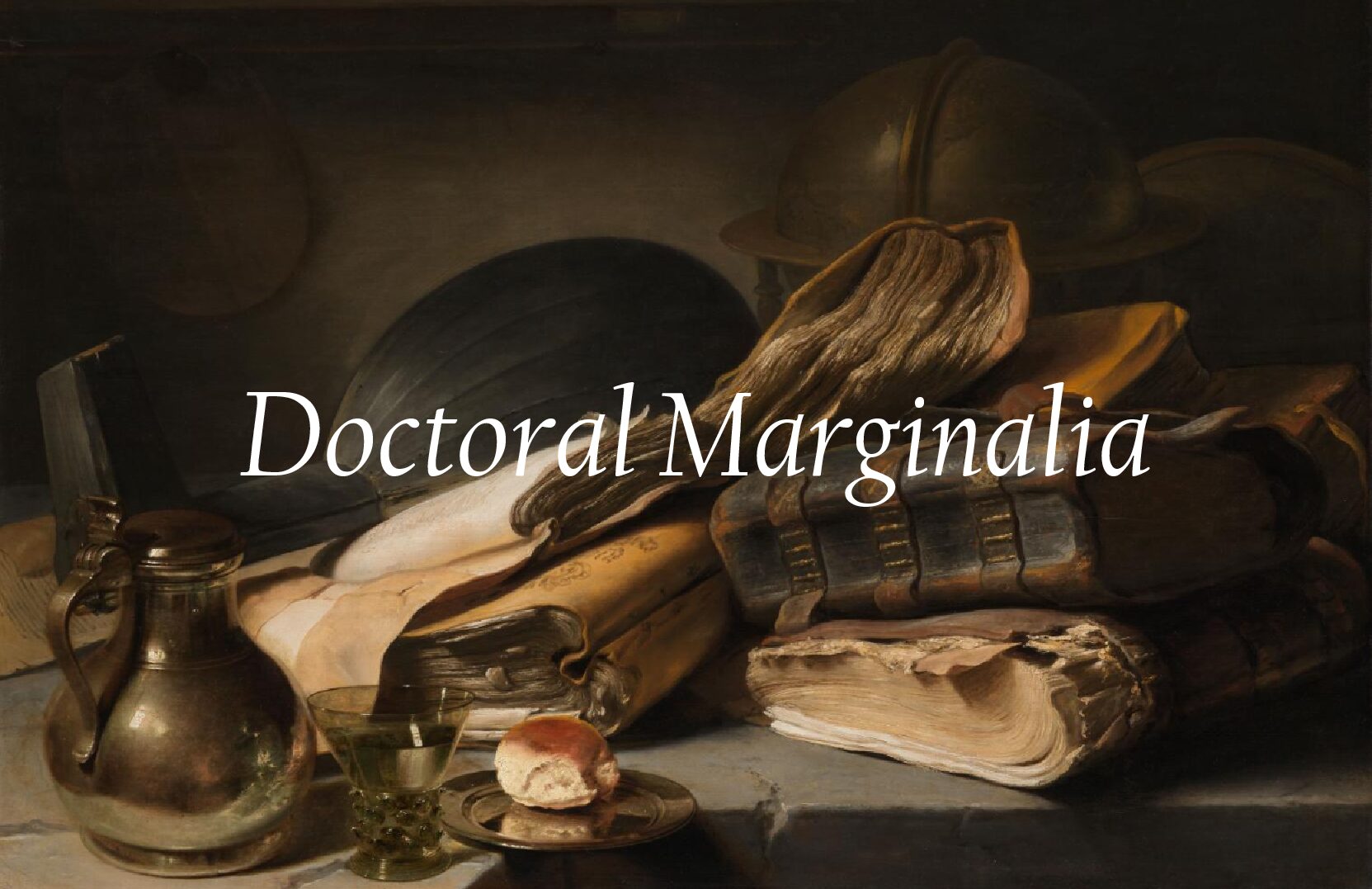

Serious reading has rarely been a silent or passive exercise. Historically, it was done with ink close by and margins left intentionally wide. For centuries, Christians have read with pen in hand—underlining, questioning, clarifying, sometimes disagreeing. These marginal notes were rarely polished and never meant for publication, yet they often reveal more about how theology was actually formed than the finished treatise itself.
As I read through historical and theological texts in the course of my doctoral work, I find myself doing the same: noting tensions, asking questions, and tracing patterns that surface again and again in the life of the Church. The series Doctoral Marginalia is an attempt to make those margin-notes visible—not as final conclusions, but as humble observations offered for the good of the Church.
What It Is
Doctoral Marginalia is a series of short reflections drawn from my ongoing doctoral research in Reformed church history. Each post highlights observations, questions, or patterns that emerge while reading primary and secondary texts. These are not polished essays or exhaustive studies, but sincere attempts to notice what the Church’s past can teach us today. The goal is to bring the attentive reader into the process of thinking, not simply to deliver answers.
In short, I want to offer thoughts to consider, not conclusions to convince.
What It Isn’t
These posts are not meant to be conclusions, comprehensive arguments, or polemical essays. They are not intended to settle debates or prove a point. Nor are they casual musings disconnected from careful reading. Instead, they are invitations to read and think along with me, notice new details, and reflect on how history might illuminate the life of the Church now.
The Intended Goal
I pray that these notes from the margins spark curiosity, reflection, and attentive reading. Through Doctoral Marginalia, Lord willing, you will encounter authors, texts, and historical moments that might otherwise remain hidden. More than simply presenting information, this series seeks to model a way of reading—asking questions, noticing tensions, and thinking deeply in the margins—so that, like faithful disciples, we might learn not only from the words on the page but from the discipline of attentive reading itself.
As Paul urges, “Think over what I say, for the Lord will give you understanding in everything” (2 Timothy 2:7). May these notes from the margins invite the same careful reflection, guiding us to engage Scripture, history, and the Church thoughtfully